Wi-Fi
Wi-Fi plays a significant role in the IoT ecosystem. It allows devices to connect to wireless networks and communicate with other devices and Internet-based services. For example, our device can collect data from sensors and send it to a server over Wi-Fi, or receive commands from a remote application.
The ESP32-C5 supports dual-band Wi-Fi 6 (802.11ax), operating on both the 2.4 GHz and 5 GHz bands. It is also compatible with earlier Wi-Fi standards, making it possible to connect to a wide range of existing wireless networks.
The 2.4 GHz band generally provides better range, while the 5 GHz band can provide higher performance with less congestion in many environments. The ESP32-C5’s dual-band capability allows an application to use either band depending on the requirements of the network and device.
Wi-Fi Modes
The ESP32-C5 can operate in different Wi-Fi modes depending on how it communicates with other devices.
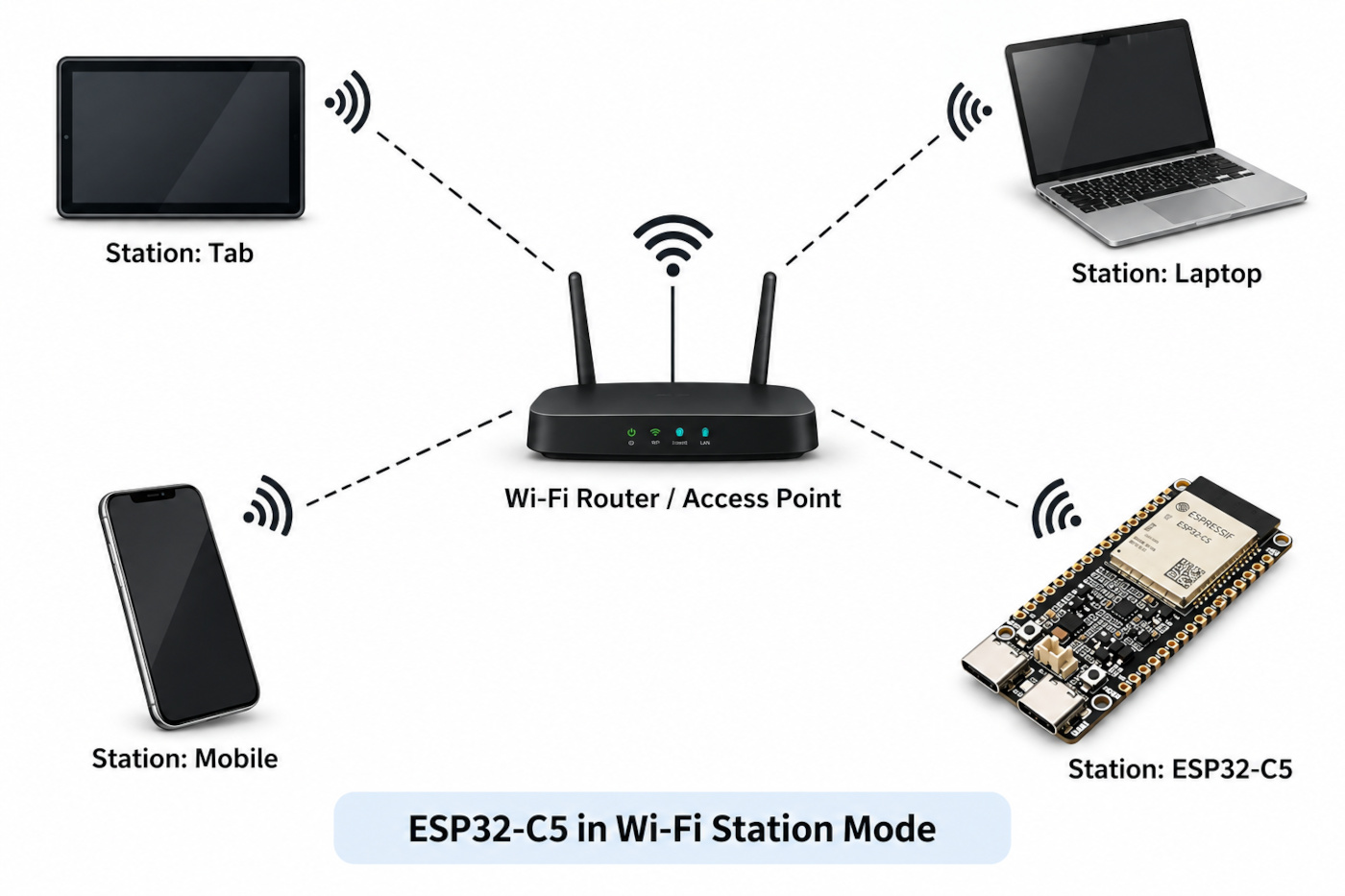
- In Station (STA) mode, the ESP32-C5 connects to an existing Wi-Fi network.
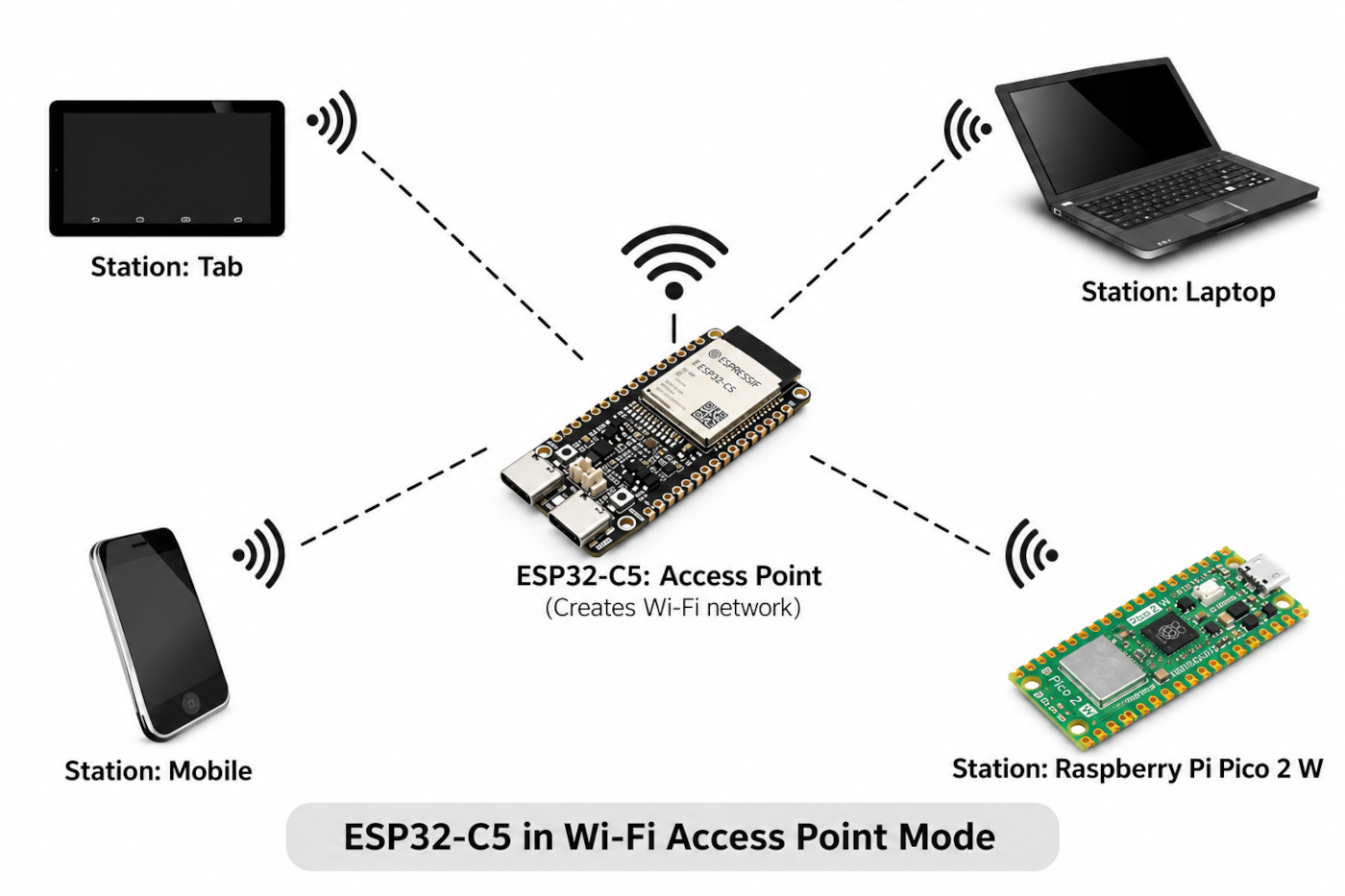
- In Access Point (AP) mode, it creates its own Wi-Fi network that other devices can connect to.
The ESP32-C5 can also operate in Station + Access Point (STA+AP) mode, where it connects to an existing network while simultaneously providing its own Wi-Fi network.
Station Mode
In Station mode (STA), the ESP32-C5 connects to an existing Wi-Fi network through an access point, such as the Wi-Fi router in your home. The ESP32-C5 acts as a Wi-Fi client, similar to a mobile phone, tablet, or laptop. Once connected, it can communicate with other devices on the network and access services available through the network.
Access Point Mode
In Access Point mode (AP), the ESP32-C5 creates its own Wi-Fi network, allowing other devices such as laptops, tablets, smartphones, and other microcontrollers to connect to it. Unlike Station mode, the ESP32-C5 does not connect to an existing Wi-Fi network; instead, it acts as the access point for other devices.